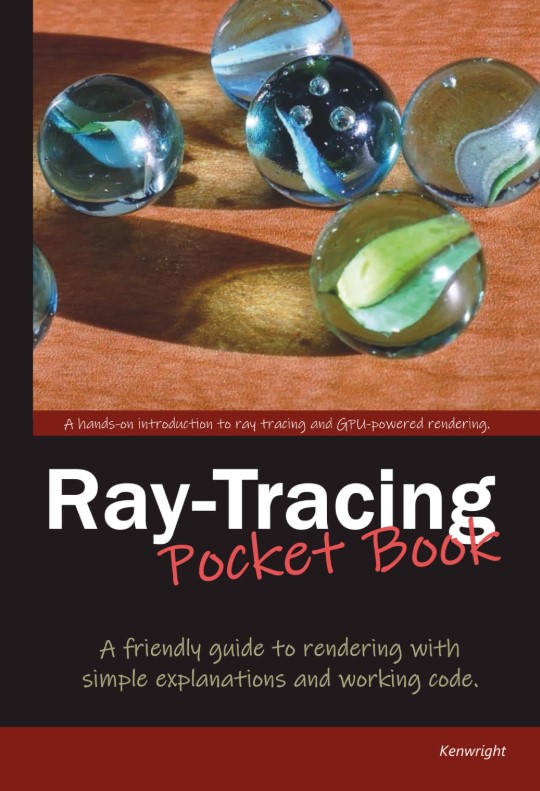
An thought-provoking dive into ray tracing, "Ray-Tracing Pocket Book (Paperback)" examines its impact on the data-driven world. A must-read for forward-thinking minds.
With a blend of analytical depth and engaging storytelling, "Ray-Tracing Pocket Book (Paperback)" demystifies rendering and its transformative potential. Whether you're a student, practitioner, or curious thinker, "Ray-Tracing Pocket Book (Paperback)" offers a rewarding journey through the intricacies of graphics. Readers will appreciate the book’s clarity, especially in unpacking complex ideas around ray tracing without sacrificing technical rigor. The author's expertise shines through, delivering a rich tapestry of insights that make "Ray-Tracing Pocket Book (Paperback)" both informative and inspiring.
The author's mastery of rendering is evident throughout. Every chapter feels like a masterclass.
The diagrams and visuals were top-notch—clear, purposeful, and genuinely helpful in understanding the concepts.
July 3, 2026
The balance between rigorous research and relatable anecdotes makes this book feel both credible and deeply personal.
The integration of storytelling and data was masterful. It made the content both credible and compelling.
July 6, 2026
I recommended this book to my entire team—and the results were immediate. Our workflow is sharper, our thinking more strategic.
Same here. It’s rare to find a book that’s both intellectually rigorous and emotionally engaging—this one nails it.
July 10, 2026Stay updated with the latest in tech literature
Agatha Christie in 1910 By Melodie Campbell Some readers of Anne’s blog know that I taught fiction writing at college for over 30 years, going back ...
Read MoreWe break down what you need to know about the costs and contracts you’ll encounter in hybrid publishing and offer tips for navigating them successfu...
Read MoreHow we doing, fellow writers? Are you hanging in there? Everywhere I look in today’s creative landscape, I can’t help but sense that more and ...
Read MoreEnhance your reading and learning experience
Quiz yourself regularly instead of rereading. It strengthens memory and understanding.
Organize books by color for visual appeal or by genre for practical access.
Explain concepts to someone else. Teaching reinforces your own understanding.
Use the Feynman Technique: teach what you learn to someone else to identify knowledge gaps.
Drink water during study sessions to keep your brain alert and functioning well.
Scan headings, summaries, and key terms before deep reading to build context.
Sarah Johnson
Professional ReviewerThis book didn’t just inform—it inspired me to rethink how I approach 3D in my own work.
July 5, 2026